Genesis
What It’s About
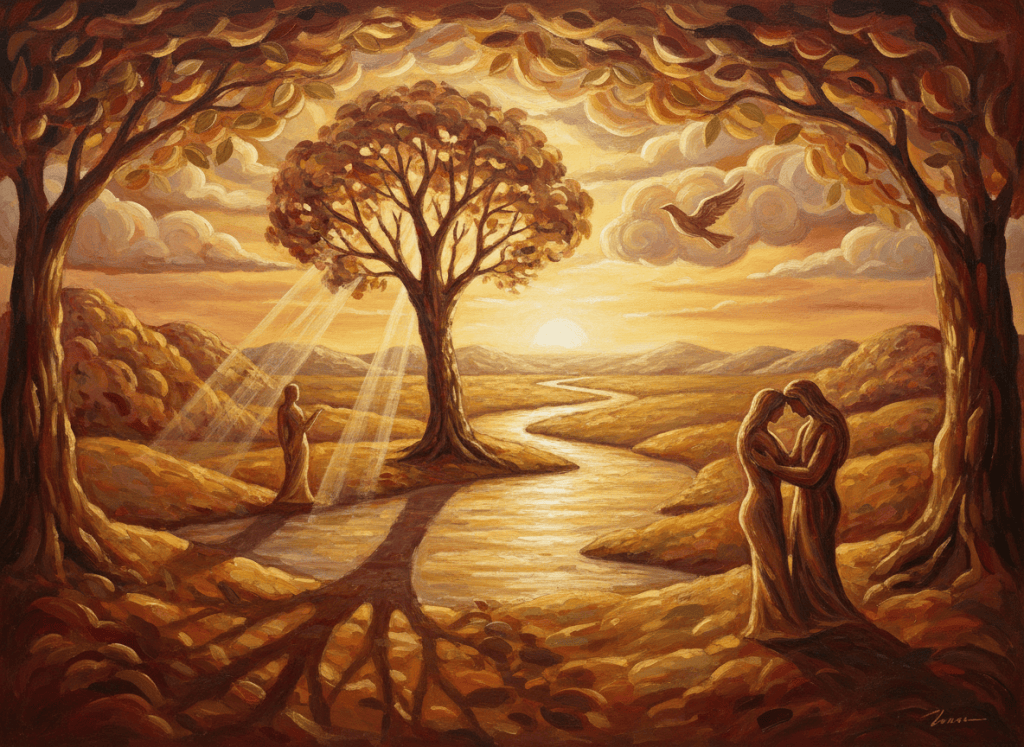
Genesis means beginning, and that’s exactly what it covers. It opens with creation itself, then moves into the fall of Adam and Eve, the flood and Noah, and finally the story of the patriarchs: Abraham, Isaac, Jacob, and Joseph. In roughly fifty chapters, it lays out where the human race came from, why things went wrong, and how God started building a plan to fix it.
It’s worth reading slower than most people do. The early chapters aren’t a science textbook, they’re theology told through narrative, answering questions about who God is, who we are, and why the world feels broken even though it was made good.
Main People
Adam and Eve, Cain and Abel, Noah, Abraham and Sarah, Isaac, Jacob (later renamed Israel), and Joseph. Each generation carries the story forward, and each one is deeply human: flawed, doubting, sometimes failing badly, and still used by God anyway.
How It Connects to Everything Else
Genesis sets up the covenant that the rest of Scripture keeps building on. God’s promise to Abraham, that his descendants would bless every nation, runs all the way through the Old Testament and lands directly on Christ. Paul makes this connection explicit in Galatians, calling Christ the true offspring the promise was always about. Even the very first hint of the Gospel shows up here, in God’s words to the serpent after the fall, that the woman’s offspring would crush its head. Catholic tradition has long read that line as the first announcement of the Redeemer.
What We’re Taught
That creation is good, made intentionally rather than by accident. That sin entered through a real choice, not through God’s design. And that even after that choice, God doesn’t abandon the story. He keeps making promises and keeps them, generation after generation, long before anyone could see how they’d be fulfilled. That pattern, God’s faithfulness outlasting human failure, is the thread that holds the entire Bible together.
 The Real War