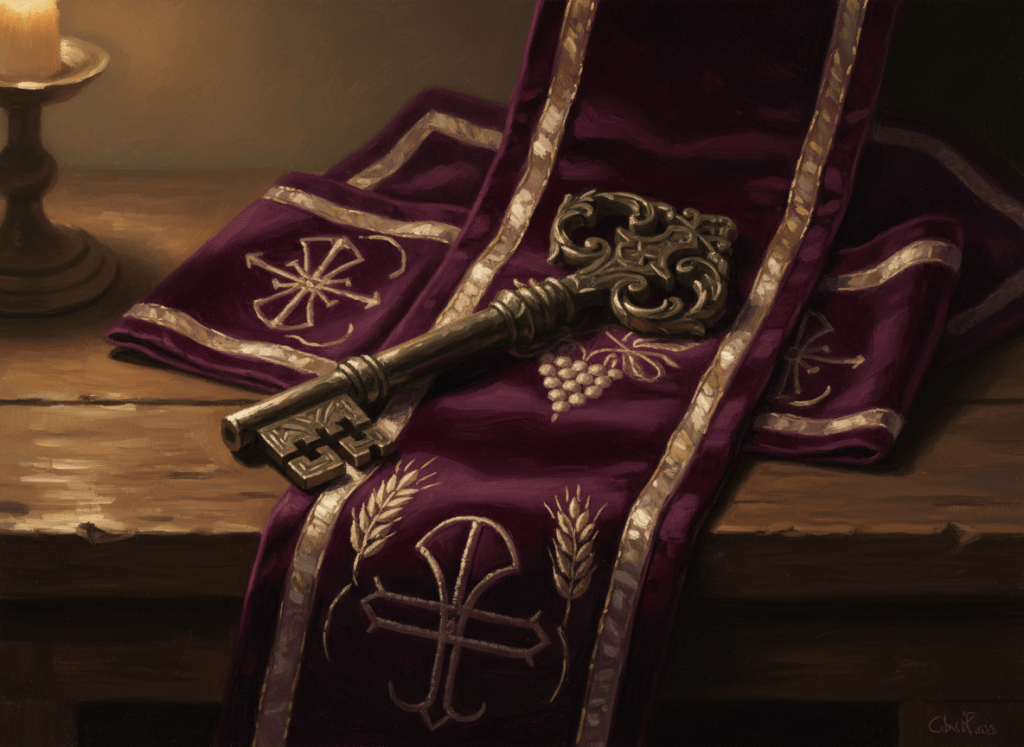
For a long time I figured confession was a Catholic add-on, something extra layered on top of what mattered, which was just being honest with God directly. He already knows everything I’ve done. Why would I need to say it out loud to a priest first.
What changed my mind wasn’t an argument, it was actually reading what Jesus did. After the resurrection, he breathes on the apostles and hands them something enormous, telling them if they forgive someone’s sins, those sins are forgiven, and if they hold onto them, they’re held onto. That’s John 20, and it isn’t a private moment between Jesus and the Father. He’s handing real authority to actual men, and telling them to use it.
I used to read that as ancient church politics. Now I read it as Jesus choosing not to leave forgiveness as something invisible between me and my own conscience. He built a way for it to be spoken, heard, and answered by someone standing in his place. The Catechism puts it plainly, the priest doesn’t forgive on his own authority, he’s exercising a ministry Christ himself handed over.
I still don’t love walking into that room. Saying it out loud costs something silence doesn’t. But that’s probably the point. Grace usually comes to meet me exactly where I’d rather stay hidden, not around it.
Today’s Bible Study
Paul writes about this too, in his second letter to the Corinthians. God, he says, reconciled us to himself through Christ and gave us the ministry of reconciliation. He calls the apostles ambassadors for Christ, as though God himself were making his appeal through them, pleading, be reconciled to God. An ambassador doesn’t speak for himself. He carries someone else’s authority into the room. That’s closer to what’s actually happening in confession than I used to think. A priest isn’t there instead of God, he’s there because God chose to send someone.
Recommended Reading
If you want to sit with this longer than a blog post allows, the Catechism lays it out clearly in paragraphs 1461 to 1467, on who actually carries this authority and why. It’s short, and it answered questions I didn’t know I still had.



Leave a Reply