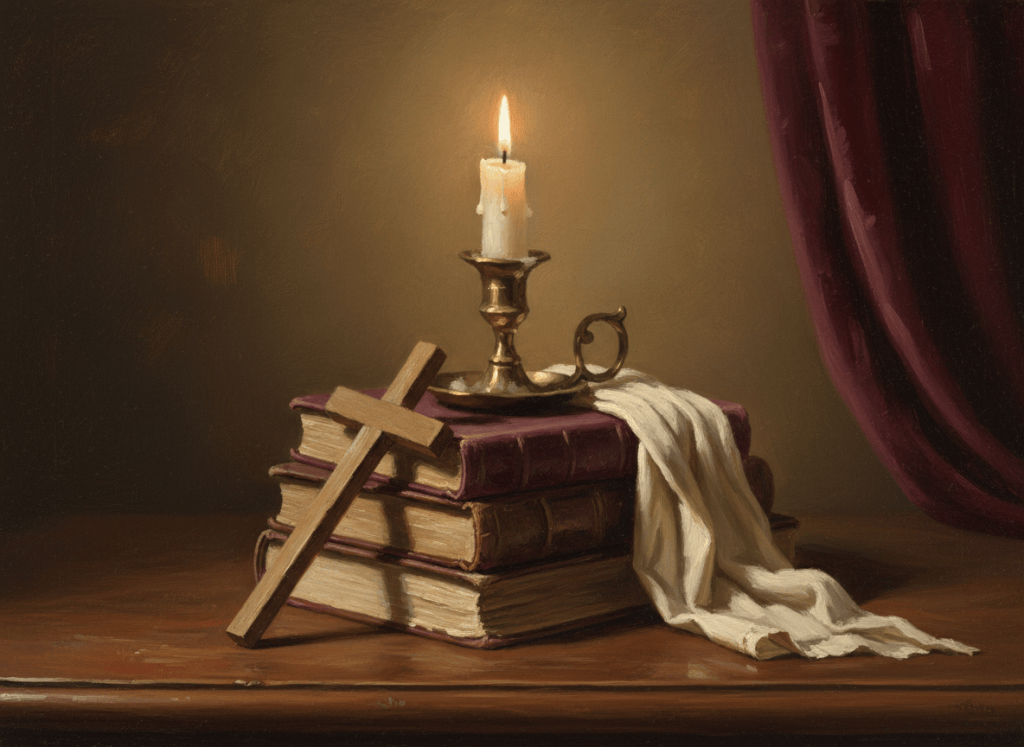
This week I’ve been sitting with confession and the Eucharist, two sacraments that ask more of me than I expected when I first started paying attention. A stranger in a small room who somehow stands in for Christ when I confess what I’ve done. Bread and wine that are somehow not just bread and wine. Neither one is easy to take at face value, and for a while I tried to work through both of them just by reading the passages on my own.
What actually helped was remembering I’m not the first person to wrestle with this. The Church has been unpacking these two sacraments for two thousand years, and the same resource that pulled me back into Scripture a couple weeks ago, The St. Paul Center, has been just as useful here. It doesn’t hand me easy answers. It shows me how the earliest Christians read the same words I’m reading now, and that context has mattered more than I expected.
I think that’s the real lesson of this week. Building a foundation isn’t something I do alone with a Bible and good intentions. It’s something I do inside something older and steadier than me.
Today’s Bible Study
Paul tells the Thessalonians to stand firm and hold to the traditions they were taught, whether by word of mouth or by letter, in 2 Thessalonians 2:15. I used to read that as Paul defending his own authority, and I still think that’s part of it. But this week it reads differently to me. He’s naming two ways truth gets handed down, spoken and written, and neither one replaces the other. What I’ve received about confession and the Eucharist came to me the same way, through Scripture, yes, but also through people who received it before me and passed it on.
Recommended Reading
If you’ve never looked at The St. Paul Center, it’s worth a visit, especially their material on the Church Fathers and the sacraments. It’s become the place I keep going back to when I want the deeper history behind what I’m reading, not just someone else’s opinion of it.




Leave a Reply