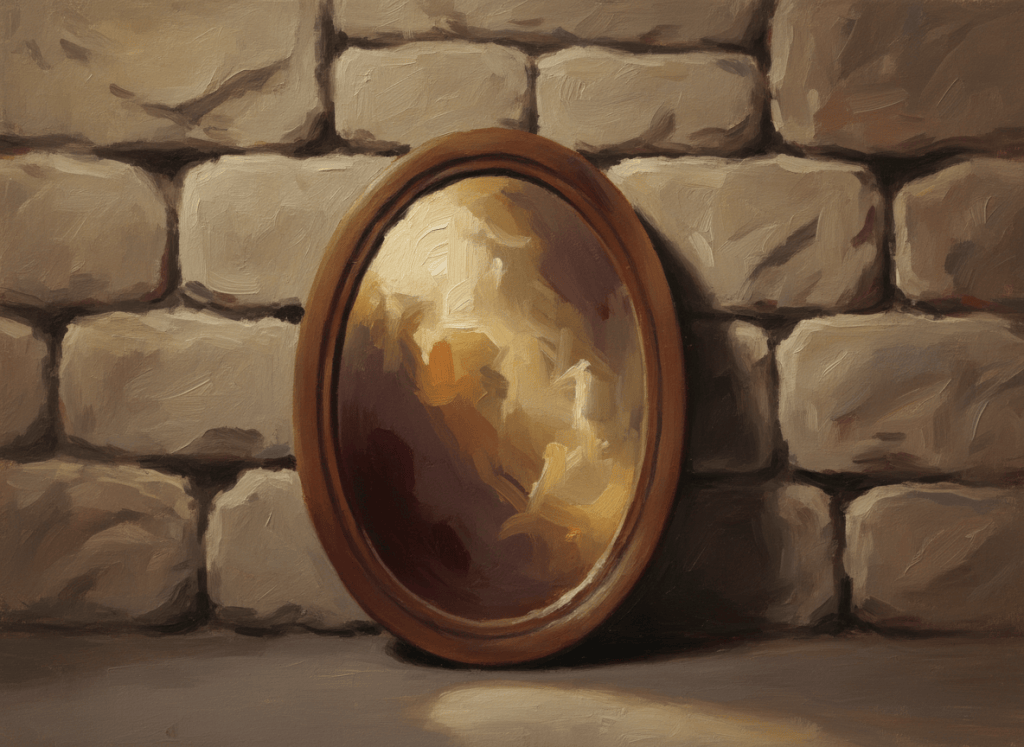
For a long time I assumed I already knew what God the Father was like, because I thought I’d start from what I already knew about fatherhood and work from there. If my own father was patient, I figured God must be patient. If he was distant on a given day, some part of me quietly filed God under distant too.
I had it backwards the whole time.
The Catechism says something that stopped me the first time I read it. Before we can really pray “Our Father” and mean it, it says we have to let go of the paternal images we picked up from our own history, because God doesn’t fit inside them. He isn’t shaped by what I’ve seen. He’s the one every real fatherhood, including my own father’s, including mine, is actually borrowed from.
That changes the question. It’s not whether God is like my father. It’s whether my father, and I, are becoming more like him.
I’m still unlearning the old order. But I’d rather start from him and work outward than keep handing him a face he never wore.
Today’s Bible Study
Matthew 7:9 to 11 asks it as a question. Which of you, if your son asks for bread, hands him a stone? If he asks for a fish, hands him a snake? None of us would, even on our worst day as a father. Then Jesus draws the line all the way out. If broken people still know how to give their kids something good, how much more will the Father who has no brokenness in him give good things to the ones who ask.
It’s not a comparison that flatters our own fatherhood. It’s one that uses it as the small, cracked example to point past itself, toward the real one.
Recommended Reading
If today stirred something, the Catechism’s own section on the Lord’s Prayer, paragraphs 2777 to 2785, is worth sitting with directly. It’s where this teaching actually comes from, and it goes further into what it means to call God Father and actually mean it than I can here.




Leave a Reply